Agrarian Crisis: What bothers Indian Farmers?

Bowed by the weight of centuries he leans upon his hoe and gazes on the ground, the emptiness of ages in his face, and on his back the burden of the world.
Edwin Markham

Today (21/06/2019) monsoon has officially arrived in Telangana,India .Not that city dwellers care about it, but a large number of people, who depend on farming, are awaiting for monsoon to fulfill their wishes and drench the thirst of their dried lands. This is not the wish of a section of people in Telangana, but it’s the wish of more than half of the population of India which depends on farming.

Agrarian crisis and removal of poverty are the main agendas in all the political parties’ manifestos during their election campaigns from the beginning of time in our country, but what political parties fail to establish strongly is 80% of the poor in India is dependent on farming directly or indirectly. Upliftment of poor will only be possible if we solve Agrarian crisis with long term road plan than a temporary solutions to woo the masses.
For better understanding what a farmer goes through, let’s look at a story.

Kailash comes from a family of long generation of farmers. His father and his forefathers were all rice cultivators. His father had 2 hectares of land, which is now evenly distributed between Kailash and his brother. The 1 hectare of land which Kailash inherited from his father is ready for another crop of paddy, but Kailsh keeping in mind of the water scarcity issue in his region he went against the idea of paddy and thought of cultivating tomato.(Fun fact:- It requires 2500 liters of water to produce 1kg of rice, however it takes only 214 liters to produce 1kg of tomato). He went to his local Cooperative bank and borrowed a loan of 1 lakh as an investment. He bought hybrid variety seeds and subsidized fertilizers for his cultivation. He took great care of his farm and used NPK (Nitrogen Phosphorus Potassium) in the recommended dosage. He installed a electric motor in his field to pump the ground water as his field is not connected to irrigation system. He bought good quality pesticides and provided good manure for better absorption of fertilizer by plants. After all this, his crop is almost ready and all he has to do is to harvest the crop, transport it and sell in the nearby market.

He took another loan of 20 thousand from a money lender in his village with high rate of interest than what bank provides. He hired few daily laborers and harvested the crop. Loaded everything into a tractor went to a nearby market to sell his fresh produce. By the time he got there all the spots near to entrance of market is taken up by other farmers, he came to know later that the remaining farmers came there by 3 A.M in the morning to get the sport in front of entrance. He cursed himself for coming late by 2 hours and settled in a spot which is a bit back. The buyers started coming and examined the produce from each farmer and started bargaining to a price which is 70% of what they expected. Most farmers refused and waited for other buyers to come and buy their product for a reasonable price, but everyone are bargaining at a very low rate. It’s almost afternoon and farmers are starting to get worried about their crop as it is losing its freshness. So they started to reduce the price they were asking than before, but the buyers are still dragging the price down. By evening, all farmers sold their crop to half of what they expected to get and few of them sold at even lesser price, Kailash is one among them. It only covered 60% his initial investment.

For the next crop too he took loan from the society bank, he repeated everything again except installing the electric motor. He used more fertilizers than recommended and as electricity is free, he pumped more water from the ground and watered his farm in expectation of higher produce. As the fertilizers are subsidized and electricity is free it didn’t cost him much. This time he went directly to the market where the middle men who bought his last crop are selling and tried to sell there, but he was objected by the trade union there as that union has a monopoly over that market only there union members are allowed to sell there. As he got nothing else to do he sold his crop to some middle men again to the same rate what he got last time.He also saw that these middle men are selling at a rate of thrice from what they bought from him. His expenses are increasing and he need to repay his loans with interests. He did the same thing next year, this year there is no monsoon and ground water levels are depleted. The produce he got is very less this time and the quality of crop is also very less.His money lender is pestering him for his money. His wife got sick in middle of all these and the hospital bills mounted up to his already mounting debt. He went in to depression from all these situations, but no one noticed what’s running in his mind. He felt humiliated of the repeated bank officers and money lenders visits to his home.He couldn’t take anymore and hanged himself to a tree in his own farm.

This is a tale of one Kailash and there are many Kailashs in India those who are going through similar or with different set of problems that’s leading to farmer suscides.

Ails of farmers

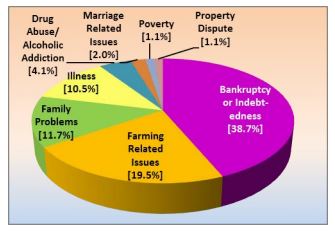
Farmer suicides is a horrifying issue which need an immediate action to curb it, as it shows a grim picture of farming and ultimately effects food security of India. Around 12,500 farmers at an average commit suicide every year in our country according NCRB data. All the issues of 12,500 farmers are not same.Check the below chart from NCRB for better understanding:-
Source:ncrb.gov.in

As you can see only 38.7% of farmers commit suicide because of Bankruptcy. So all these political parties coming up with farm loan wavier are targeting this portion of farmers with loans in banks. Most of the farmers are still taking loans from informal sources like loan sharks and small chit funds. These loans will never be payed by government as they are informal. So addressing the issues behind the bankruptcy is the key to this problem than waving off loans. Here are few problems that needs to addressed which can bring down around 60 – 70% of the farmer suicides.

1) Awareness on water crisis and development of irrigation infrastructure

India is second largest irrigated country in the world only after China, but only one third of its agricultural land is irrigated remaining two thirds depend hugely on rainfall and ground water. Of the 12,602 farmer suicides in 2015, 4,291 farmer suicides are from Maharashtra itself. Vidarbha and Beed regions experienced less than 80% of normal rainfall. These regions produce sugarcane and cotton prominently. Sugar cane and cotton are wealth crops and need large amounts of water to grow. Growing sugar cane or cotton in regions like Beed where there is an acute rainfall shortage and depleted ground water levels shows how ill informed these people are about water crisis. Most of the old farmers choose sugar cane because of less labor in cultivating sugar cane. Even by the use of Drip irrigation technique they couldn’t achieve anything significant. Most of the irrigation canals in these areas are dry, however most rivers like Godavari and Krishna which originate in Maharashtra carries lakhs of liters of water into Bay of Bengal everyday. Construction of dams and interlinking of river basins are to be done on an emergency war footing scenario to address this issue. Projects like Kaleshwaram and Polavaram stands as an example for inter-linkage of river basins. Pattiseema project, which pumps Godavari water from Pattiseema to Krishna, helps in irrigation of almost Rs.2,500 crores worth of crop.Watch the documentary on water crisis titled 1000 feet under to get to know the situation in Beed region.

2) Lack of storage facilities and infrastructure

Farmers are not provided with storage facilities such as cold storage and weigh bridges in ground level. Without these facilities, farmers can’t demand a profitable price as he will be constantly worried about the freshness of his produce and he will sell his produce to a very less amount. Though government is taking measures in supporting farmers in form of transportation, infrastructure development will have a big impact on farmer’s income.
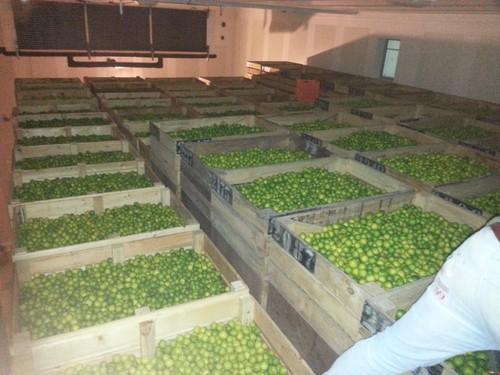
Lemon stored in cold storages

3) Middle men

Middle men create problems at ground level to farmers. These middle men have a monopoly over markets and force farmers to sell their produce at cheap rates. A strict government intervention is needed in controlling these unions. Programs like Rythu Bazar in Telugu states have to be encouraged. Rythu Bazars are places where farmers can come to the market and sell there produce directly to consumers by eliminating middle men. No charge will be collected from them for using the spot and in addition to that transport in state transport buses is also free to help them economically.

rythu bazar in telugu states
source:thenewsminute

4) Spurious seed rackets

Farmers invest money and time in producing their crop. Spurious seed rackets which take advantage of farmers replace original seed companies’ seeds with their fake seeds and sell to farmers. Farmers buy them and invest their time and resources by sowing in the fields, only to know later that crop is useless. This is a huge loss to farmer who is already reeling under various other pressures. Though government is seizing such outlets and checking transports which are transporting these fake seeds, these fake seeds rackets are still rampant throughout the country.

5) Inefficiency of government schemes and government officers at the ground level

Telangana government came up with a scheme called Rythu Bandhu. Through this scheme, state government annually provides Rs.8000/- to farmers for Rabi and Kariff crop seasons before he lays his crop so as to support him economically in buying fertilizers and seeds. This is a great initiative and even lauded by central government and even tried to implement it in central level. The problem with this scheme is this scheme is applied to only land owners. If a person is farming in a rented farm land, he is not eligible for this scheme, but the owner of the land with passbook who is not even farming gets the amount. Secondly, there is no cap on the number of acres of land a farmer can have to be eligible for this scheme. If there is a farmer with 100 acres he gets Rs.8, 00,000/- annually, this is a drawback on this scheme since a farmer with such huge lands is usually capable of investing in farming and he needs no assistance. As these schemes are extended to farmers with passbooks only, Ground level government officials won’t be giving passbooks to farmers without any personal gains for themselves and they won’t work efficiently to distribute them among farmers. Recent agitation of farmers regarding this issue shows how serious this situation is.

source:Africatimes.com

6) Free power and subsidies of fertilizers

Many state governments in India provide free power to agricultural sector. Providing anything for free will always produce negative side effects. Farmers started using this free power and pump out water from ground unnecessarily without giving a second thought. This is the main cause for depleting water levels in many places in the country. Repeated utilization of fertilizers or overuse of them has led to serious soil degradation in our country. Farmers without understanding the background working of fertilizers use more amount of fertilizers to get greater yields, but these fertilizers won’t be absorbed by plants instead travel through soil layers and contaminate ground water. The kidney failure issue in Uddanam is a lesson to governments for providing subsidies to fertilizers without educating farmers. It is estimated that 4500 people had died in the last ten years and 34,000 people are suffering from kideny related diseases. However, 70% of India’s Agri production growth is because of good fertilizers and sudden decrease in subsidies of fertilizers will make fertilizers un-affordable to small scale farmers. Installing of ground level work force to map the nutrients in soil and advising farmers in the usage of fertilizers will definitely help in overcoming this issue.

7)Climate change and changing weather patterns

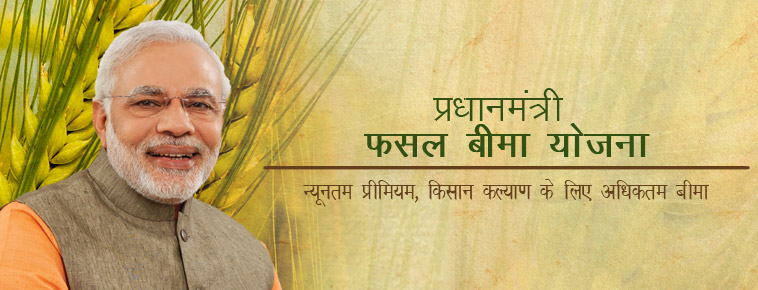
Climate change though it is debated if it is even real or not, weather patterns are definitely changing. Kerala observed worst floods in a century, while its neighboring state Tamil Nadu is facing drought. East coast is constantly under a cyclone alert, whereas the west coast regions are facing less than average rainfalls. These inconsistent and unreliable weather pattern to a country like India where almost 70% of its farm lands depends upon rainfall is serious. Most of the farmers are uneducated and don’t know about crop insurances and government insurance schemes like Pradhan Mantri Fasal Bheema Yojana,etc.Government officials and NGO’s are to be encouraged to educated farmers at root level.
8) Lack of awareness on the necessity of crop rotation

Farmers who are used to traditionally cultivate one type of crop don’t change their crop over years and cultivate the same crop again and again. This leads to increased activity of disease causing microbes to that crop in the soil and crop diseases gets rampant destroying the yield in one go. By rotating the crops year by year or for every crop season this sort of situation can be totally controlled, but farmers feel this is a risk since they enter into new cultivation deviating from their traditional crop. NGO’s like CSA are working to bring sustainable agriculture to farmers. These organizations inform farmers to which schemes they are eligible and processes for obtaining the scheme benefits.

source: croprotation222.blogspot.com

9) Changes in patent laws

Indian IP laws specify clearly that seeds and plants or parts thereof cannot be patented. Under Protection of Plant Varieties and Farmers’ Rights (PPVFR) Act, 2001 India opted to provide sui genesis legislation which provides intellectual property protection for plant varieties including transgenic varieties.To keep it simple it states that no company can patent on seeds, plants or plant parts in India. Genetically modified seeds(GM seeds) or BT seeds( Bacterial Thuringiensis seeds) are lab grown gene altered seeds. A gene of thuringiensis bacteria is taken and introduced to cotton, brinjan or corn seeds which makes these variety of seeds pest resistant, there by limiting the use of pesticide. BT seeds are developed by foreign companies and are used by 80% of american farmers where as they are completely banned in European countries, as their effects on humans are not well researched. But still these sort of new genetically advanced seeds which are developed by foreign companies will never enter into Indian markets if our patent laws are unfavorable to them. Lays sued four farmers for distributing there own variety of potatoes to other farmers without the company’s permission,however due to public outcry for going against the farmers Lays company backed off from the case. How can companies bring there products into our markets if we don’t have good protection laws for them? To make our farmers competitive in the global market these sort of seeds are a shot in the arm. Please follow the case of Monsanto Vs Nuziveedu seeds for better understanding.

image souce: majumdarip.com

10) Mechanization of farming

Traditionally Indian farming is done using wooden plough, sickle,oxen and huge labor working on the field. These traditional farming techniques have not yet changed even in the 21st century where remaining countries are replacing human labor with machines to increase quality and output of farming. Predominantly farmers in India are either small scale or medium scale. They own very less land and in some areas like West Bengal the average land holding capacity is around 0.5 hectares. Using of machinery in such small lands in costly and unnecessary. This created small patches of land owners in a very big cultivatable land who are unable to use machinery as it leads to huge investments. This scenario is same in many parts of our country. This is mainly due to inheritance practices which led to division of land between children equally creating small patch land owners. Government should encourage the idea of land banks, where all these small farmers will register their lands in land banks and create a big land where usage of mechanization becomes a viable option and costs less per acre. Profits will be shared among the farmers after the produce is sold

Secondly, a huge amount of farmers are leaving farming and taking up jobs as farm laborers. Though 55% of Indian population is in farming, agriculture contributes only 13- 14% of nations GDP. This is a very inefficient way of utilizing human resources. Mechanization will remove these jobs, but this human resource can be used in sectors like Industrial, infrastructure development and so on.

Though these are few issues in farming there are other issues like good health care schemes to farmers, pensions to old farmers, lack of innovative techniques like in Israel, addressing mental health of farmers, fluctuating MSPs,etc. Government of India should commit itself to long term road path. PM Modi’s promise to farmers to double their income by 2022 is a good vision but effective steps have to be taken in ground level to make that dream come true.

Kissan Mitra Helpline is an initiative by Centre for Sustainable Agriculture-a NGO based in Telangana, who takes calls from farmers in distress and listens to their problems. They have helped many farmers who are depressed and on verge of suicide. They send their Kissan Mitras who are on ground, go meet farmer and discusses solutions with them. They educate farmers on the available schemes, they intervened in many situations where farmers were not getting passbooks and they help farmers in moving towards sustainable eco-friendly agricultural practises. They solved more than 5000 farmer issues and are awaiting for government intervention in more than 4000 other cases.

Zero budget natural farming is another technique which has originated in Karnataka. This technique is being widely implemented by Andhra Pradesh Govt and UN lauded the steps taken by State government in order to promote eco-friendly agriculture. In this technique farmer can use natural products like cow dung and cow urine of Desi cows as fertilizers and increase disease resistance in crops. This technique allows farmers to invest low and reap profits as much as chemical fertilizers give. Himachal Pradesh government is taking steps to implement this technique in its entire state.

Without solving the above problems and just waving off farm loans is not a good option. Most of the farmers take loans from unofficial sources, so there is no way clearing those debts by government. Even clearing the debts of farmers in banks will encourage bad loan payment practices among farmers. Farmers who are paying loan regularly will stop paying loans, since government is showing a very keen interest in clearing of their debts. In long run banks will consider these farmers as loan defaulters and make it difficult to get a loan for these farmers. So it’s a high time where political parties remove loan waver as part of their manifesto.

Finally, there is still a long and treacherous path for Indian farmer. We import 25% of our nation’s pulse requirement, but produce surplus wheat and rice. We need to educate our farmers to grow crops based on demand basis rather than growing their own traditional crops because they are comfortable in growing them. India’s well being and food security is dependent on them. India needs another Green revolution.

Is solar a reliable ticket to move away from fossil fuels?

I’d put my money on the sun and solar energy. What a source of power! I hope we don’t have to wait until oil and coal run out before we tackle that.

Thomas Alva Edison

Climate change is the biggest threat humanity is facing at present. Ironically, we brought this to ourselves. Many people still consider climate change as a problem of future, but it is happening right now and around us and we are turning a blind eye to it. The change in climate has already started but the change in majority of people’s attitude is yet to come.

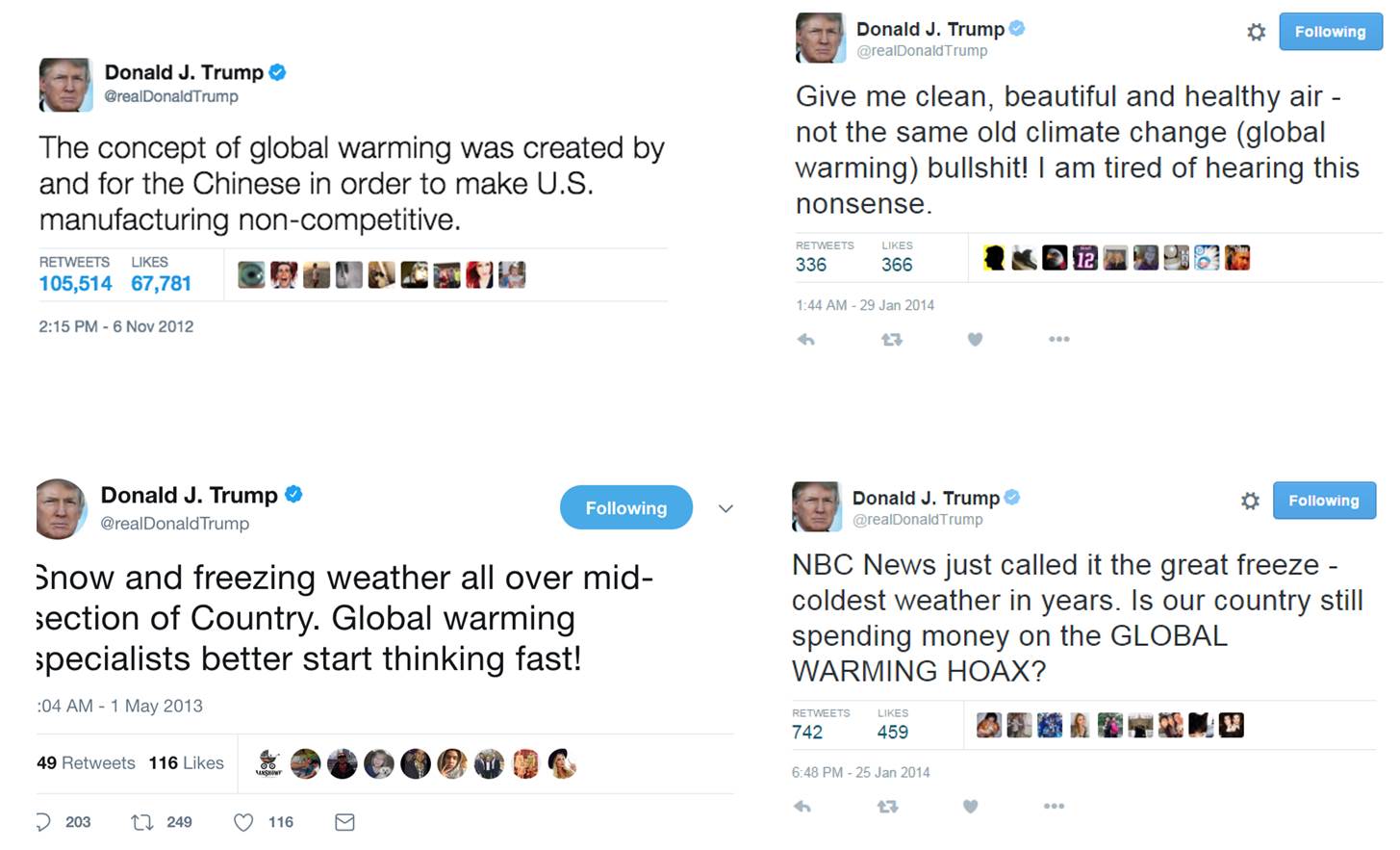
The main stimulants for climate change are Fossil fuels. Worldwide demand for fossil fuels in 2018 was 99.2 million barrels per day and is projected to 100.6 million barrels per day by 2019. These fossil fuel emissions has contributed majorly to the rise in CO2 emissions in 2018 by 2.7%. Many countries like China and India, who are signatories of Paris climate accord of 2015, have increased there emissions by more than 5%, which shows a clear negligence in the commitment towards Paris climate deal,but emerging economies like India can’t invert it’s curve of fossil fuel demand without sacrificing there growth. By 2040, India’s electricity demand will be thrice of what it is now and to support that amount of demand, when it’s majority of DISCOM’s are in loss is a big hurdle. All the major economies have made their share of emissions form industrial age until there economies are stable and we can’t expect developing countries to suddenly leave their growth and commit to Climate change. America, a developed nation, had pulled out of Paris climate deal in 2015 and Trump out rightly denies climate change.

Source: Google

Considering the fact that we have got the solutions to replace fossil fuels with renewable energy resources and steps are being taken by many countries to move towards renewable energy resources is promising. India initiated an International solar alliance with 122 prospect countries to decrease the dependency on fossil fuels world wide and exploit the solar energy more efficiently. The world’s largest solar park is being set-up at Pavagada,in Karnataka, with an estimated investment of 16,500 crore rupees. But, is this step in an effort to decrease fossil fuel consumption a correct one?

source: ozy.com

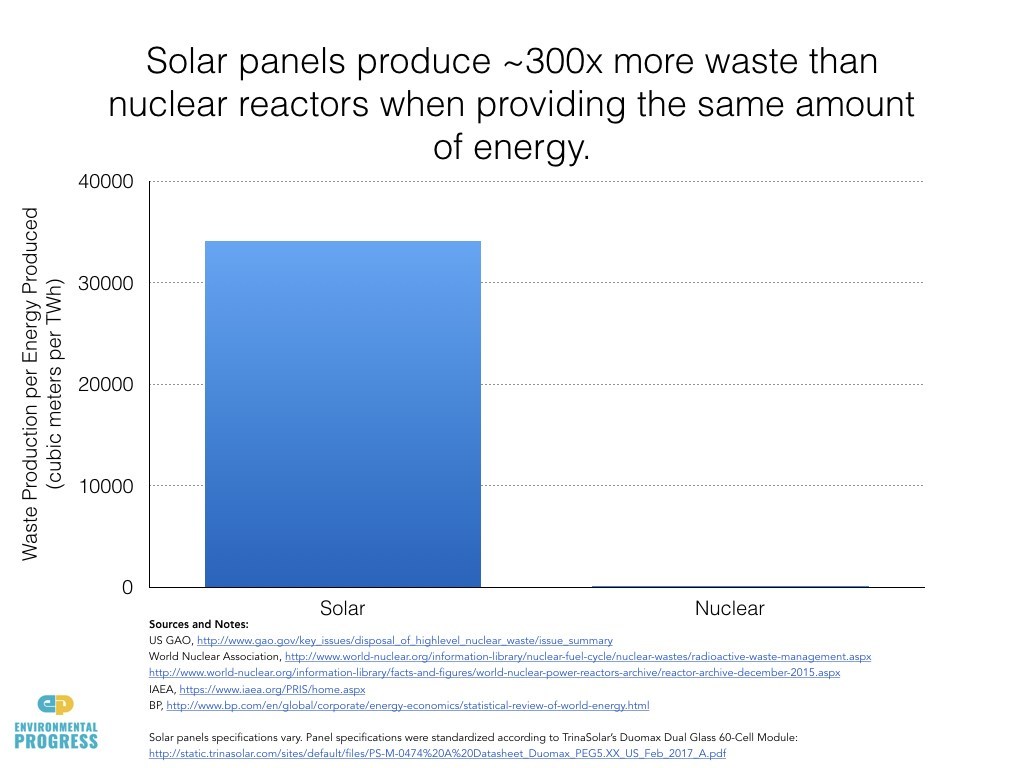
Today the best solar panel in the market can give an efficiency of around 22.2% and it has a lifetime of about 25-30 years. Now think about all the solar panels that are being installed now; they will be obsolete by 2050. According to a study by Bridge To India (BTI), India will be staring at 1.8 million tonnes of solar e-waste by 2050. India is already a Fifth largest e waste producer and we recycle a mere 5% of total e waste produced because of poor infrastructure, legislation and framework. 95% of India’s e-waste is recycled by unorganized sector and scrap dealers, who neither have awareness of the toxic chemicals present in the e-waste nor proper knowledge on how to dispose it. This improper waste management will harm the environment and health of individuals in that sector.

Solar panels are basically made up of silicon, silver and trace amounts of lead,cadmium and other toxic chemicals which cannot be removed without dismantling the solar panels. Without the proper infrastructure and laws, these solar panels will end up in landfills without recycling.

source:
https://nationaleconomicseditorial.com/2017/06/28/solar-energy-300-times-more-toxic-waste-nuclear/

This situation will keep us in a state to ask ourselves if solar power is worth all these dire outcomes. The answer is definitely a big yes. Since 2010, more than 120 million people have been benefited from off grid solar panels alone. People in remote areas where access to grid is impossible can have solar panels as one of the alternatives. Solar panels are thought as a threat at present for the e waste they are going to produce in the future, but countries like China already started research on how to manage solar waste. India can tweak its policies to accommodate more stringent laws in waste management.

GOGLA e-waste working group is developing a e-waste toolkit with different modules ranging from Technical introduction to recycling of batteries and other components to Business models and partnerships for e-waste management. Many industry leaders suggest that a strong take back mechanism is the best solution to deal with proper solar e-waste management.

D.light

D.light is a company with strong e waste management policy and practice. D.light offers warranty to all its products and replacement of damaged solar panels are done at place they were bought. These damaged products are send to service units where the damage is assessed and if possible they are refurbished and introduced into the market. If the products are faulty beyond repair, they are sent to the dismantling chain for effective recycling or disposal.

Mobisol is another company with a unique business strategy. They keep an eye on all there systems remotely and track the performance and health of their products. With this type of business model they offer preventive maintenance, replacements of parts and collection of there products at the end of there life cycle.

The above two companies offer a unique insight into how waste management can be done efficiently. Holding companies that make their products responsible is the best solution and governments can provide incentives to encourage companies to follow proper recycling practices. It will also be easy for government to track down the companies with improper waste management policies and impose fines.

Though the situation looks grim today, strict policy changes and infrastructure improvement to tackle this issue will definitely change the scenario.


https://www.dreamstime.com/stock-illustration-happy-cartoon-solar-panel-sunglasses-sunbathe-wearing-having-image74573750

Monetary system and exchange rates

In our modern world, we lost ourselves in the rhetoric of believing in better future. Getting up everyday like it’s a Monday morning and dragging ourselves to work for various reasons like to have a better future, to give our spouses a good life, to give our children a good life, to have a good post retirement life, to have a good status, etc, we are investing our present for our better future and this better future entirely scales to the amount of money you are having. The currency on which we are betting so much on was not the same as it once was, at least not until 1971.

What is a currency?

Currency refers to any particular money (physical or virtual or commodity based or by any other means) which is in circulation among general public and accepted by designated government body of that particular state.

Virtual – Physical – Gold currency.
Source: Google.

History of Modern currency.

“The farther back you can look, the farther forward you are likely to see.”

Winston Churchill

To understand the modern currency we need to look back into our previous monetary systems. In currency’s history, most of its pages are filled either with gold or with silver. People used to trade commodities for gold or silver coins and these precious metals are heavy and also started attracting danger to merchants. To make this more safer and easier banks came into play, where you can deposit your money and get a certificate of deposit and exchange it in the branch nearer to your place for your precious metals.

Around mid 19th century, countries started to develop certificates or currencies equivalent to a specific amount of gold, this is the classical gold standard.In United states, a $20 bill gives you and equivalent of $20 gold. That is, if you go to a bank and ask for gold or silver for your 20 dollar bill, the bank will give you gold or silver.

During World war 2, the whole of Europe is in War frenzy. Most of there man power and industries are used to support war. This lead to the decrease in food production in Europe. So, European countries started importing food produced from various parts of the world like America, India, etc. America started to receive gold as payment and its gold reserves amounted to almost two thirds of World’s monetary gold. It’s economy doubled in the first four years of World war – 2 from $71 billions to $142 billions.

During 1 – 22 of July 1944 a conference was held in Bretton-woods, New Hampshire. Delegates from 44 countries had attended the conference and signed the famous Bretton – woods agreement which is a first of its kind to fix exchange rates among independent states. All parties agreed to adopt a monetary policy that maintained their external exchange rates within 1 percent by tying its currency to gold and the ability of the IMF to bridge temporary imbalances of payments. That’s when IMF and World Bank are formed. At this point gold is pegged at $35 per ounce.

Source : Google

After this, America started to finance in rebuilding of Europe by buying foreign bonds in exchange for dollars.When US fell short of dollars, it started to print dollars more than the gold reserves it has (as no reserve ratio is mentioned in Bretton – woods agreement) and these dollars were used in investing in Europe.For some reasons, the gold rates were never revalued to the amount of dollars printed.

Everything was going fine, until in 1960’s president of France understood the situation and started to exchange dollars for money. Many other countries Joined France and started asking gold for dollars. This lead to the depletion of gold reserves in US. If US gold reserves reaches zero the US dollar bills don’t have any backing and the entire world’s monetary system will crumble. For this reason, President Nixon brought a temporary halt , later permanent, to exchange of gold to dollar bills.

On August 15th of 1971, all the currencies became Fiat currencies.Fiat comes from the Latin word ‘let it be so’. These currencies are not backed by any commodity, instead it is backed by the government that issue it and this is our present day currency. As these Fiat currencies are not backed by any commodity it’s a good news for government. The government can print these currencies and fund it’s wars, debts, investments in infrastructure and etc, but, printing these currencies more will lead to more amount of currency circulating in the market and this will lead to an increase in price of goods. This phenomenon is also known as inflation.
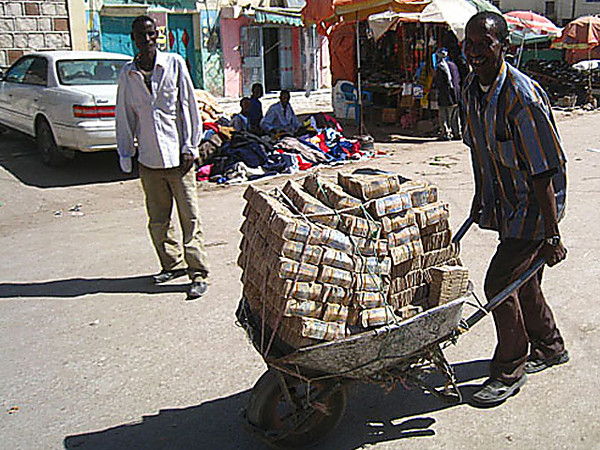
Let’s suppose, our Indian government has bought all the black money back to India and distributed 15 Lakh rupees to all the citizens. Now everyone in our country is richer by 15 Lakh rupees and government can reduce its subsidy or increase tax on fuel prices because we can afford it. Because of this move, transportation costs of commodities will increase and which leads to indirect price appreciation of other commodities. There by making everything costly and this is inflation.In a very bad situation it may turn into Hyperinflation like in Zimbabwe or Somalia where if you want to buy milk you need to carry a hoard of money .

Somalian man carrying currency

What makes our currency float?

After Britton woods agreement, the monetary system changed to partial Gold standard exchange system. Where exchange rates of currencies were fixed, but the modern fiat currencies don’t have a fixed exchange rate they change everyday. But what makes our currency rate change everyday? If we need to know the reason behind this we need to look closely at basics of economics. Price of a good depends upon its demand.If the demand of that good increases the price of the good decreases and if the demand of that good decreases the price of the decreases.This above principle applies to Fiat currencies.

At present there are three types of methods to fix currency exchange rates.

  • Floating Exchange rate system: A free Floating exchange rate currency has its rate set by Foreign exchange market depending upon the demand and supply for that currency relative to other currencies. This demand and supply is produced through various sources like trade, FDI, speculation, political situations, etc. For suppose, US imports $100 worth of goods from India, for which it has to sell its dollars and buy $100 worth of rupees (on that day’s exchange rate) to pay to Indian suppliers. This increases the demand for rupee and decreases the demand for dollars. As a result Rupee appreciates against dollar. Currencies like British pound, American Dollar, New Zealand dollar have this sytem
  • Fixed exchange rate system: In this system, the currency of one country is pegged to another currency or commodity or bunch of other currencies. This type of exchange rate system is good for smaller economies as they take debt from stable or developed foreign countries , to which they peg their currency, and repayment amount will be as anticipated. The main disadvantage of this type of system is it’s currency will depend entirely on the currency value to which its pegged. Currencies like UAE Dirham, Honkong dollar, Nepalese rupee. etc have this type of system
  • Managed Floating Exchange rate system: The exchange rates are generally allowed to float but when there is a heavy volatility in the market, the central bank or government of that particular currency intervenes in the foreign exchange market and tries to stabilize the rate i.e., if the rupee is going down, the RBI sells its foreign reserves and buy back rupee their by increasing rupee value or if rupee value is appreciating too high, RBI buys dollars by selling rupee and this brings down the value of rupee. Countries like China, India, Japan, Brazil,etc,. follow this system.

Factors which effects exchange rates

Though the title looks like there are different type of factors, they all are actually pegged to Demand and supply rule of currency

source: tradestockresearch.com

Trade

Trade is the primary factor that effects countries exchange rate. Let’s assume India supplied Milk to America, for which American importer has to sell US dollars and buy Indian dollars to pay to their Indian supplier.Here, demand for Rupee has increased so Rupee’s value gets appreciated and If India imports Aeroplanes from US we sell rupees and buy dollars, their by increasing dollar value. The trade balance between these two exchanges determines the demand of the currency and the currency with more demands experiences a appreciation.

Interest Rates

Foreign Investors tend to invest in countries with Higher interest rates, because they receive higher interest amount for their investment. If a country X cuts its interest rates than the general market value, investors remove their investments in that country and invest in some other country whose interest rates or more. In this transaction, investors sells currency of country X and buy the currency of some other country whose interest rates are high, there by loosing demand for currency of Country X and depreciating the value of their currency. If the rates are hiked, the opposite happens. Countries try to cut interest rates to encourage loans and circulate more money into the countries market there by producing more jobs. This might increase the inflation value(which is kept in between 2% -6%) but the Regulatory Bank will try to control it. If the inflation is too high i.e., the prices of commodities are increasing, then Central bank hikes its interest rates their by reducing the flow of money in market and bringing down the costs.

Controlled depreciation

Many countries try to keep their currency exchange rate as low as possible manually. China buys a lot Dollars and increases its foreign exchange reserves and indirectly creates demand for dollars and decreases demand for yuan. But this sounds weird, why does a country artificially decreases its currency value? To know this let’s go through a small example: India and China are both exporting computers of same quality and price. The cost of one computer in India is Rs.15,000/- and in China it is 15,000 yuan. Let the exchange rates be 1 USD = RS. 50 and 1 USD = 50 yuan. The american customer pays $ 300 for 1 computer and buys 3 for $ 900 . Let’s say China weakened yuan value to double,i.e., 1 USD = 100 yuan, then the same american can buy 6 computers. So, customers will start to buy from China because it gives more goods to same amount of dollars. The exports in China will boom and creates a good economy. This increase in Exports will create demand for Chinese Yuan,there by appreciating Chinese yuan again. So, Chinese central bank buys more dollars to halt the appreciation of Chinese yuan

Political situation

If a country is in war, this will be a bad sign for investors, because, in general, wars bring havoc to the economy of a country. If investors are leaving the market they sell the currency and bring down the demand for it. It’s just not only war but also political turmoil, assassination of state heads, ratings by rating agencies like S&P, etc.

Oil Prices

India is the third largest importer of oil. To purchase oil we pay in dollars and OPEC countries accept dollars as a payment. So we sell our rupees and buy dollars and pay in dollars. If this goes on demand for dollars increase and demand for rupees decrease there by decreasing the value of our currency. If the production of oil is hiked and supply is more, then the price of oil comes down and the demand for no of dollars to be spend per barrel decreases there by depreciating US dollar.

Speculation

If the markets speculate that demand for Indian rupee increases in future, they will start buying more rupees to make a profit in future. This will create demand for rupee and rupee value appreciates and the vice-versa will depreciates rupee value.

Relative strength of other currency

The exchange rates are generally compared against dollar. If the demand for dollar in other markets of the world has fallen then the value of dollar depreciates there by appreciating rupee value, though there is no increase in demand for rupee and the vice-versa creates depreciation of rupee.

Government Debt

If the amount of government debt increases, then it may raise fear in market about the ability of government to repay the debt. If the economic growth is good then Foreign investors may remain in the market but if they fear that a government can not repay they move out of that countries markets and bring down the currency value.

These are all just few factors and there are many more which effects the exchange rates of a currency.

Many economists believe that our modern monetary system will be replaced by some other monetary system in future, as this has replaced previous monetary systems which has replaced their own predecessors. Who knows we might revert back to gold or silver.

Note:- For readers, who are interested in Forex as an investment destination remember the above factors and do your research before investing in a currency. Foreign exchange works in lots of standard ( 1,00,000 units), Mini (10,000 units), Micro (1,000 units), Nano (100 units) .Foreign exchange markets will be open 24 hours a day except in weekends i.e., 22:00 GMT on Sunday (Sydney) to 22:00 GMT on Friday (New York).

Happy Reading…:-)

What is wrong with modern parenting?

Source: Google

In this competitive era, Parenting is NOT just a phase of everyone’s life but it is a highly dedicated phase for modern parents. Modern parents, especially, middle class and upper middle class, are obsessed with their children’s life in all aspects. Starting from their schools to which career they should choose to at last they are getting involved with negotiating the salary for their kids with their employers. This is absurdly different from what the parenting was done until baby boomers and Generation X.

Until the Generation X era, parenting was limited to caring for their children and very rarely ended at career choices. But, this scenario has changed with Generation X’s parenting style. Most of the Millennials and Centinals belonging to middle class and upper middle class group have their life choices in the hands of their parents. This change in mentality is primarily due to change in the way of thinking of this economic group. For example, car is not a necessity for this group but in fact it is a status symbol. They have the similar ideology with their children too. It’s not that parents just care about their status but they feel over protective of their children in this uncertain, volatile, complex and ambiguous world. If a child isn’t performing well in their studies, parents are taking it as something to be ashamed of in public and the consequences are: parents caring too much about their children, solving their problems, making them to think that they are special, not holding them responsible for anything, not allowing them to make choices,etc so that their child live in a stress free environment or how can any parent not help their child if they are in trouble. This sought of obsessive parenting is termed as Helicopter parenting coined by Dr. Haim Ginott in his book of Parents & Teenagers, after few teens saying how their parents hover around them like helicopter all the time.

Source:Google

Parents who come under this category are:

  • Parents who are not loved as children tend to have made a rule for themselves to shower their children with love and support
  • Parents who observe their parents peer group,helicopter parents, have a tendency to do the same
  • Parents who are anxious about the present economy or job market try to stir the career of their children to less ambiguous path. Though this doesn’t make it look that bad, children are actually loosing their career interests in pressure form parents.
  • Parents who feel they are accountable for how their child turns out to be

The intention of parents is pure but the real world is not expecting them but someone with accountability, decision making ability, leadership skills. These children who are taught that they are special, don’t find themselves suitable for many of the key positions and making them unsuccessful in their careers.

Making your child’s room when they are 7 year old is not helicopter parenting but making it even when they are 17 is. Coming out of that style of parenting is hard but it is necessary for the child’s future. Allow them to do their own homework and help them only after they have tried. Make them accountable for their own mistakes and don’t take it upon your shoulders and go to Principal’s room for it. In a nutshell, it’s going to make your child struggle, allowing them to get disappointed and helping them to work through it

Hyderabad’s New initiative to “Feed the need”

Biryani is like a synonym for Hyderabad. Because of the IT sector explosion, Hyderabad is drawing youth from all over country. With the growing cultural diversity, Food Joints have started to sprout everywhere and party culture has grown along with them. We can see people partying all night in clubs, pubs, drive-ins, etc,.which lead Food joint owners to offer variety of food sections until late nights. As per the city norms, all food should be disposed of by the day end. Because of this almost half of the city’s waste is food itself, but ironically many of the Hyderabadis are going to sleep starving every day.

The city is already equipped with an amazing scheme called Annapurna. Backed by the State Government of Telangana, this scheme provides 45,000 meals daily through its 150 designated centres for Rs.5/-

Still, there is problem with food wastage and poor people who want to save that Rs.5/- go to bed with an empty stomach. NGO Apple Home came up with a brilliant solution to this problem. They proposed to install refrigerators at important places and people or restaurants can fill the refrigerator with their excess food. Apple Home NGO along with GHMC is launching these 530 Litre refrigerators at 10 locations, at presently, and are thinking to set up these refrigerators at many other locations.

These food stalls will be provided with electricity by GHMC and the food quality is monitored by Person with Disabilities hired by the NGO. While speaking to a private media house, Apple Home NGO founder Dr.Neelima Arya stated that this food is not just for poor but to every person who is needy.

I hope my fellow Hyderabadis will donate to these refrigerators and use them wisely, to make this noble idea a grand success.

What makes milk to overflow while boiling ?

Milk boiling is not that hard process, but standing near the stove and watching it until it starts to overflow feels like decades. Ever wondered why only milk overflows but not water?

Milk is not as simple as water. It contains water, fats, lactose and proteins with various densities and boiling points to form that yummy milk. The fat present in milk is in emulsion form and protein in colloidal state. Due to its compound liquid state its boiling point is 100.5 °C. But the 87% of water in milk has a boiling point of 100 °C .

The emulsion of fat which is lighter than water stays above water and forms a layer over it and when start heating water starts to boil. As the temperature reaches 100 °C water turns into vapor and starts pushing the creamy layer just like in steam engine. This makes it to form a bubble and the creamy layer overflows giving way to vapor.

Next time, if you accidentally forgot to switch off the burner blame the water vapor for the overflow..:p

What’s happening to men and women?

Our world has changed into a competitive world, but this competitiveness is not just limited to workplaces, it is entering into homes and relationships. Men and women who used to live for each other are questioning why they have to compromise for the significant other. As a result, it is wrecking homes and families

The #Metoo movement needs no introduction. It has spread like a wildfire,by burning down celebrities, politicians and people in higher posts alike. Many people welcomed this move as historic, while some other warned of its grave outcomes for women themselves as its popularity rises.

This movement has spread rapidly from US to other countries, by sprouting from film industries and spreading to other. Men who enjoyed power with no stains on their background are being thrown into the light. The movements main agenda is to bring down sexual harassment at work places and create a safe place for women to work. Due to a few self-centered women, the ground breaking #metoo movement is stained. False allegations on men of higher power by women started to come out and people started questioning the authenticity of previous cases which were thought to be true. The problem with harassment cases is, they are discrete and don’t leave much of an evidence . This is really an ambiguous state as the members of ICC can’t decide the authenticity of the complaint.

Source:google

Concurrently, women who don’t have anything to do with the movement are getting a silent backlash. In general, men occupy the top positions of a company and they have to mentor younger women to reach that position. Lately, these men are either unwilling or scared to mentor these younger women alone. These senior men are declining business travels , one on one meetings, client dinners, etc with younger women as they are feeling risky. One-on-one’s are essential for any employee to grow in an organization, but removing them will leave many of the female employees without any feedback on their work. This above phenomenon is proved by Lean IN study:

  • “Senior men are 3.5 times more likely to hesitate to have a work dinner with a junior-level woman than with a junior-level man—and 5 times more likely to hesitate to travel for work with a junior-level woman.
  • Almost 30% of male managers are uncomfortable working alone with a woman—more than twice as many as before. “

This behavior,pence effect, of senior men,to stay safe, is leaving women in midway through the ladder and this ,consciously or unconsciously, turned from sexual harassment to sexual discrimination or gender segregation.

Millennial men are avoiding marriages and leaving jobs at an alarming levels.Helen smith, forensic psychologist and holds a PhD from University of Tennessee, discussed in her book “Men on Strike: Why Men Are Boycotting Marriage, Fatherhood, and the American Dream – and Why It Matters” about the same.

Few MRA (Men’s Rights activists) are considering this move as necessary as they don’t want to have an unwanted lottery. Men’s rights activists are describing the incidents where men were trolled, abused on the internet for an unnecessary reason, whereas women in that situation were received as strong and independent. Recently,on Koffee with Karan, an Indian talk show, a young cricketer made comments on women which were received by feminists and interet in a very harsh way and lead to there suspension in two matches against Australia whereas Actresses like Nargis fakri when asked about “whom would you choose between Batman and Superman”, she replied with

“Anyone. Doesn’t matter. Are they going to date me or save me? Whoever has the bigger penis maybe”

and left unscathed.If someone committed a crime and left unpunished it doesn’t make their actions correct. If sexist remarks by few women are unchecked doesn’t mean men should do the same mistake and expect the same result from people.

In the perspective of women, The #metoo movement is a necessity. They have gone through a lot of silent struggle for decades. Not only were there voices was never taken seriously but in fact they were dismissed. Women started coming into work force very recently and its a duty of every individual to make it safe for them. They are entering into fields that are not familiar to them.

Day after day we see articles to empower women and bring them into workforce. World leaders are acknowledging the power of women workforce which was left untapped until now. A countries growth can be drastically improved by bringing this untapped human resources mainstream, for example, look at Bangladesh whose cotton industry have a grown 100 times in last 40 years by bringing women labor into the industry. For this magic to happen women should feel as safe as men are. Men don’t get treated patriarchaly, nor will they be asked for sexual favors, nor their commitment for work after pregnancy is questioned. This has to accepted by men and they should support women regarding this.

Men scared of working with women can be understood but the solution of this problem is not by pushing women back into the hole they are trying to come out of. Transparency at work places has to be enhanced and every individual should feel safe.It should not be limited to workplaces, their husbands should play the same role as women were playing by supporting their spouses until now.It’s high time we give it back to them.

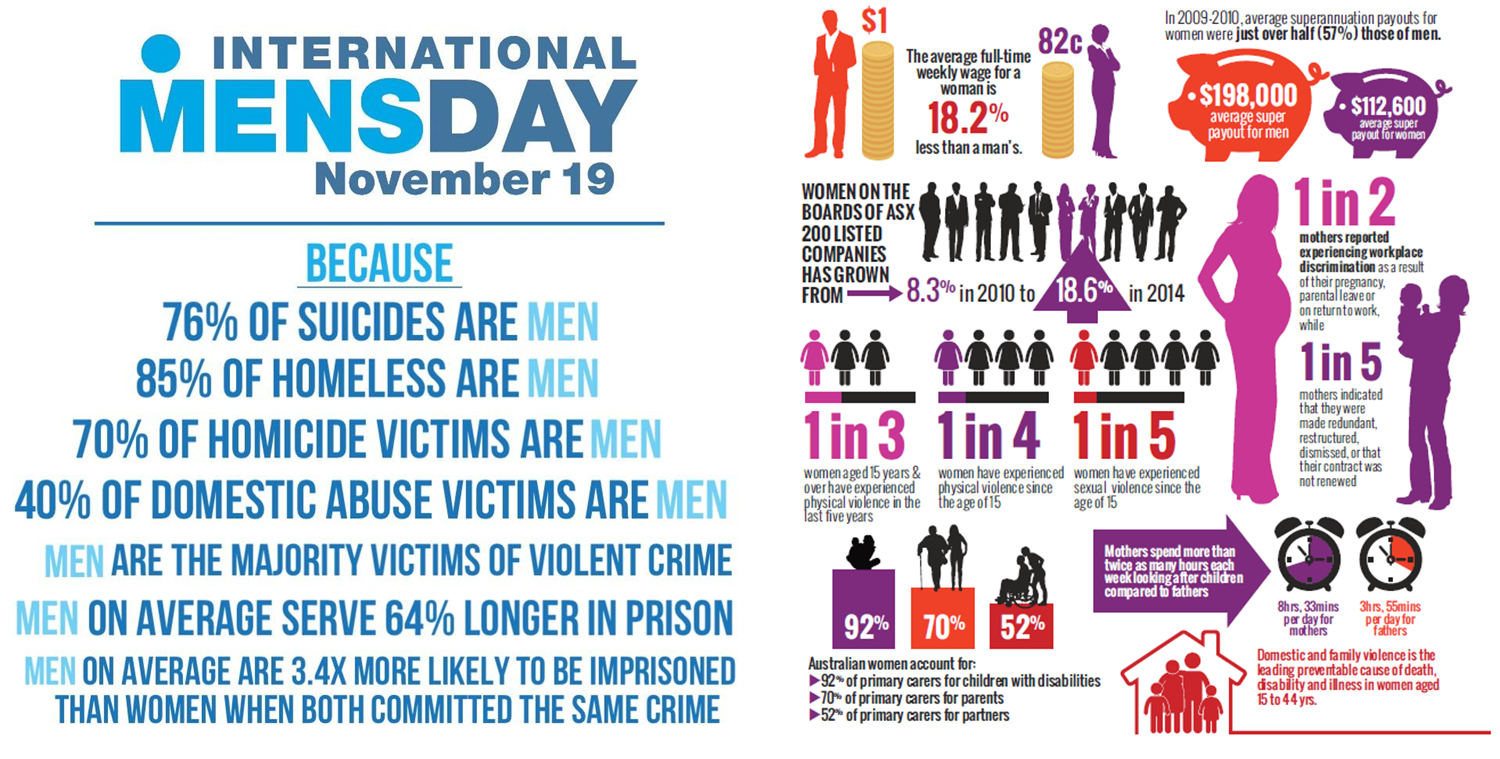
Source:Google


The above picture,typically, shows the statistics used by both Feminists and Men’s Right Activists. The stats and statements are nothing less than alarming. Instead of solving these problems in hand men and women are fighting over who are suffering more. Happy families are being destroyed. Children are growing with one less parent.

While both the parties fight for a good cause there are instances when they have swung the pendulum far too extreme. Both the parties should realize that they are starting to create a competition where empathy, care and compromise should come into play which defines us. Having a happy family is the ultimate treasure in one’s life. Men and women should recognize that they both make up the two hands on steering there life and no one’s hand is upper.

source:google


What to do after school?

Childhood is the most blissful phase in everyone’s life. We don’t have any responsibilities nor worries nor any life altering decisions to take. All we have to do is play, hangout with friends, be the coolest kid in the class, gossip among friends, try to impress our secret crush and all sort of things which you might feel funny one’s you have grown up. “Your still a kid” is what you often hear which makes you desperate to grow up.

As you begin to realize that your school life is going to end soon you will start hearing a new phrase ” What’s next ?” instead of the regular “You are still a kid”. So you start asking yourself what’s next ? You want help from parents and friends for this big problem, but they are in the same dilemma as you are.

In India, you will start hearing, at-most, of only two options : engineering and doctor . This might start puzzling you that whether your life is just either option A or option B. If you are from this phase of life, don’t worry your life is not that limited, there are hundreds of professions and hundred other ways to lead your life. This post is exclusively for you, so go through the post and you will start to learn about many new professions which are as good or much better than those two which you hear.

Arts Background

Bachelor’s in Design

Though this course is frequently misinterpreted as for people who are not good at science group, deign field is one of the most successful and creative field. This field is picking up rapidly in India as its importance is being noticed. The demand for designers is also increasing exponentially in India as urbanization is bringing the status factor to all classes of people.

NIFT (National Institute of Fashion Technology):

source: google

One of the prestigious and most sorted institute in India for fashion and textile industry enthusiasts. There curriculum is for 4 years and graduates from this college often get placed in industries related to textiles, color and illustrator. Automobile companies too choose these designers for there expertise in color and fabric. Many of them opt to remain as consultants, free-lancers or to start there own design firm.

Website: https://nift.ac.in/

NID (National Institute of design) :


This institutes offer professional Bachelor’s and Master’s degree in five main streams: Industrial Design, Communication Design, Textile, Apparel & Lifestyle Design, IT Integrated (Experiential) Design and Interdisciplinary Design Studies. These streams are further divided into: Animation Film design, Ceramic and glass design, Exhibition Design, Film and Video communication, Furniture and Interior Design, Graphic design, Product Design, Textile Design, etc. To keep it simple, NID is for designers what IIT is for engineers.

Website: https://www.nid.edu/index.html

Commerce Courses

Commerce course is another lucrative and ever green field. Commerce field is another field which is shadowed by the engineering boom in India. Many of them come to a conclusion that Commerce is equal to an accounts officer in a company, but that’s just another phrase invented to kill the dreams of students who want to pursue a career in finance. There are many fields in commerce background.

Charted Accountant:

CA is one of the best careers one can have, but to keep it bluntly its hard to crack. Many people dropout from this career after many trials in there long academic career in this field.

People who choose CA first go through CPT and then IPCC and finally CA finals. In the meanwhile they need to get ITT (100 hours) course done and have an articleship experience (Working under a CA). After clearing CA finals they become a CA

A charted accountant will deal everything from accounting to taxation of private and individual entities.

Investment Banker

These financial experts works for, in general, for Investment banks like JP Morgan, Goldman Sachs, Morgan Stanley, etc., by assisting in huge and complicated transactions. They are mainly concerned with raising capital for government bodies, private institutions or others.

Investment bankers job range from structuring a merger, acquisition, issuing securities for raising money,pricing financial instruments,navigating regulatory requirements,etc. They provide clients with their expertise on to how to move forward depending upon the market pulse.

Investment banking is gaining popularity in recent years, it pays the best in its field. To be a investment banker one is expected to have a good skill sets in verbal and written communications, process complex math calculations and most importantly to work for long hours. In general, a investment banker have a MBA from top colleges and Charted Financial Analyst designation to add strength in their profile.

Apart from these two there are many other fields which are emerging and give a good pay check in the market like financial analyst, financial planer, Cost Management Accountant, stock broker and Investment analyst, bank management, Taxation and ta procedure,etc and they each have their own bachelor degree for specialization in their field.

Law course

source :Google

Legal profession is considered as a respectful and ,if you are successful, a very high paid job. As the boom for engineering has been subsiding many other fields are showing there true potential and one of them is Legal. If you take up law course, you don’t have to practice law in court like you see in movies, you can be a consultant for corporate institutions or as a free lancer. Choosing corporate or industrial law as your specialization will launch you in that direction.

Students who want to enter law course can choose a five year program of BA LLB(Hons) (after 12th) or a three year course of LLB ,after graduation, in one of the many law colleges[NALSAR University of Law(Hyderabad), National Law School of India University (Bangalore), Gujarat National Law university, etc] in our country. CLAT is the entrance exam you have to take to get into a law school and LSAT score is also accepted in many colleges. Colleges like Symbiosis conduct their own entrance exam.

Hospitality

Hospitality is a diversified field. One can work anywhere from hotels to food chain to travel industry and many more. Thanks to globalization, this sector is growing at a tremendous phase. Professionals in this field have to go through intense training as interns and professionals to gain success in this field. People who have chosen hospitality sector are not constrained to one country, with good communication and interpersonal skills they can work anywhere in the world.

Students who want to join bachelor’s in hospitality has to take NCHMCT JEE test. Depending upon their rank from this test they can choose the best from various institutions pan India. Institute of Hotel Management Catering & Nutrition, Pusa, New delhi is the top college in India for Hotel management course. It offers a 3 year course with intermediate internship as OJT.

Merchant Navy

Many people feel that they don’t want the regular 9-5 job, earning a bit and having a monotonous job in their life. They want some action and adventure in their life and if you are one of them this is the perfect job. It is not as risky as an armed forces job nor as boring as a computer job. Seafarers in general travel around the world and stop at various countries ports. They get a sailor pass to roam around the port city until there time to leave. Seafarers spend a lot of time on sea but they don’t complain about being bored or seasick. They start from a decent salary and draw huge checks while going up the ranks depending on the ship they work for.

Students who want to enter this field after 12th need to have a degree in B.E/ B.Tech from Marine Engineering for four years. After having a sailing experience for 6 months they can become a marine engineer. People can also get into merchant navy after there graduation if they have opted for Mechanical Engineering in there B.tech. After which they need to complete one year GME course.

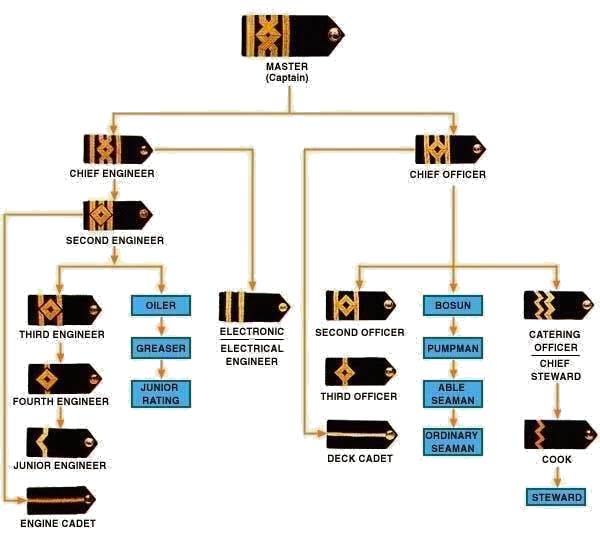
Source: http://howtojoinmerchantnavy.blogspot.com

If you want to know more about merchant navy go through below links:
http://marinersthoughts.blogspot.com/
http://howtojoinmerchantnavy.blogspot.com/2014/01/5-reasons-to-join-merchant-navy.htm

These are just few careers you can have other than those regular rhetoric courses. Explore yourself first before you choose your career. Don’t just choose because it pays more or someone told you that it is good. Try to find the connection between your personality and the career you choose and if you choose the right career after exploring yourself you will be very successful in your life.

source: thepossibility.in/living-happy-life-forever/


Thank you and Happy reading…:)